Endoscopy - myDr.com.au
Endoscopy is a medical procedure where a doctor uses a thin flexible lighted tube inserted into the body to look for, diagnose, treat and prevent disease.


An upper gastrointestinal (GI) endoscopy is a procedure to look at the inside of your oesophagus (gullet), stomach and duodenum using a flexible endoscope.
Your symptoms or previous tests suggest you may have a narrowing (stricture). A dilatation involves stretching the narrowed area.
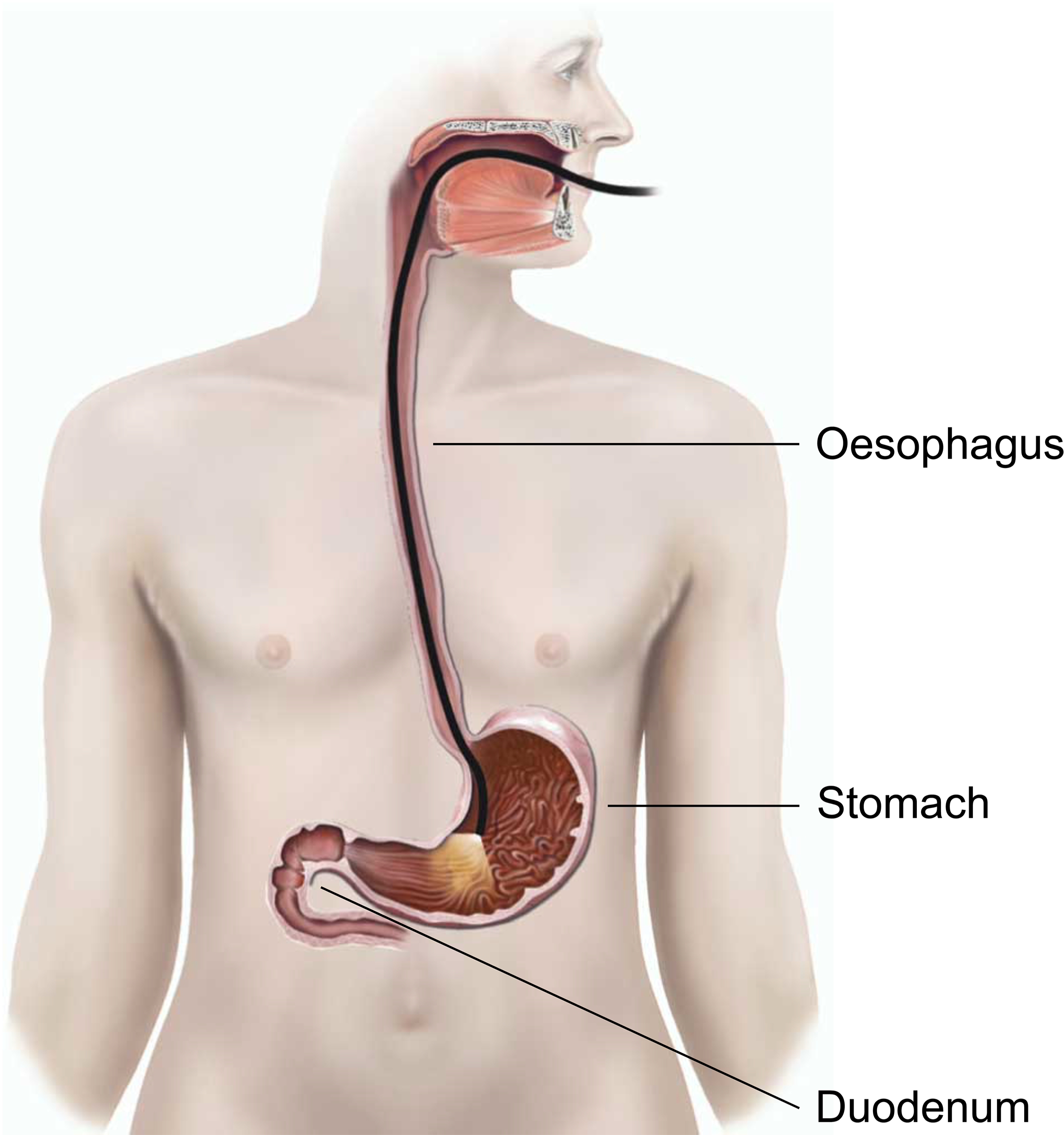
An upper GI endoscopy.
An upper GI endoscopy and dilation is performed so that your healthcare team can find out why you have certain symptoms.
If there is a narrowing, the endoscopist (the person doing the endoscopy) can stretch (dilate) the area with surgical instruments.
Your healthcare team has suggested an upper GI endoscopy and dilatation as it is the best way of finding and treating the problem. You can leave it alone, but this is not recommended, especially if you are having difficulty swallowing food.
Your healthcare team may not be able to confirm or manage what is causing your symptoms, and they may get worse. If they do, speak to your healthcare team. If you decide not to have an upper GI endoscopy and dilatation, you should discuss this carefully with your healthcare team.
An upper GI endoscopy and dilatation usually takes about 15 to 20 minutes.
The endoscopist may offer you a sedative or painkiller to help you to relax and feel more comfortable.
The endoscopist will place a flexible telescope (endoscope) into the back of your throat. From here the endoscope will pass into your duodenum.
The endoscopist will be able to look for problems in these organs. They will be able to perform biopsies and take photographs to help make the diagnosis.
The endoscopist can perform a dilatation using one of the following techniques.
The healthcare team are trained to reduce the risk of complications.
Any risk rates given are taken from studies of people who have had this procedure. Your healthcare team may be able to tell you if the risk of a complication is higher or lower for you.
Some complications can be serious.
After the procedure, you will be moved to the recovery area where you can rest.
The healthcare team will tell you the results of the procedure and talk to you about any treatment or follow up care you may need. Results from the biopsies will not be available until a later date, so the healthcare team will write to you, call you or ask you to come back to the clinic to give you the results.
Your healthcare team can advise you when you should be able to return to work after the procedure.
An upper GI endoscopy and dilatation is usually a safe and effective way of finding out if there is a problem with the upper part of your digestive system and managing your symptoms.
IMPORTANT INFORMATION
The operation and treatment information on this page is published under license by Healthdirect Australia from EIDO Healthcare Australia and is protected by copyright laws. Other than for your personal, non-commercial use, you may not copy, print out, download or otherwise reproduce any of the information. The information should not replace advice that your relevant health professional would give you. Medical Illustration Copyright © Medical-Artist.com.
For more on how this information was prepared, click here.
Find out how we develop and review our content.
Last reviewed: January 2026


Worried about your health?
Select a symptom, answer some questions, get advice