
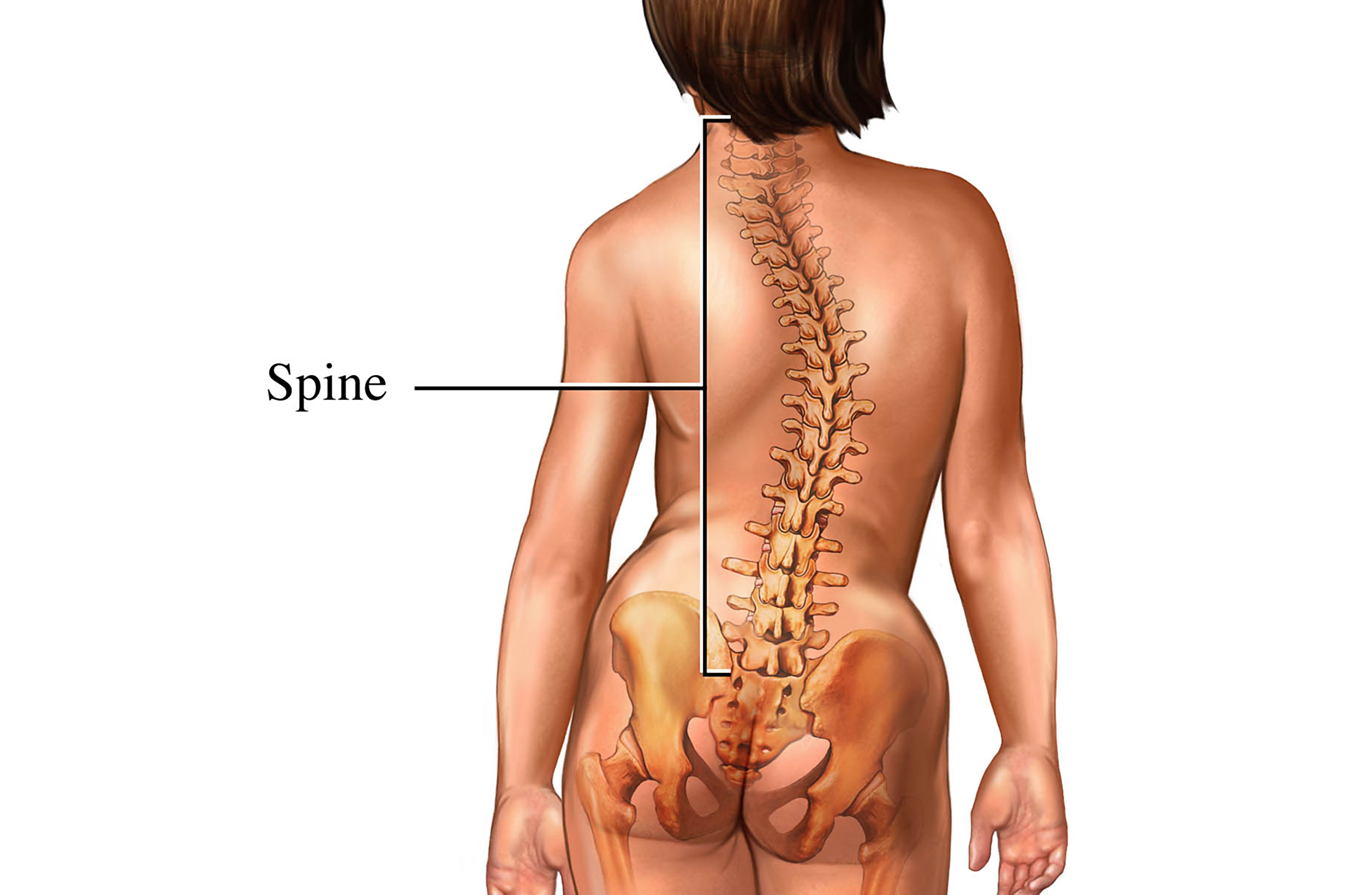
Scoliosis

Scoliosis is a condition where the spine curves sideways and rotates, forming an 'S' or 'C' shape.
It usually starts in children and teenagers while they're still growing, but it can happen at any age.
Scoliosis doesn't usually cause pain or other symptoms. If the curve gets bigger, it might make it harder to breathe or cause you to feel self-conscious about how your body looks.
You might notice that:
Most of the time, we don't know the cause of scoliosis. This is called idiopathic scoliosis and is the most common type. It usually happens in healthy children during their growth years.
Sometimes, scoliosis can be congenital, meaning you're born with it.
It can also be caused by nerve and muscle conditions, such as:
Scoliosis is not caused by:
Females are more likely than males to develop severe scoliosis.
Scoliosis can also run in families.
See your doctor if you notice signs of scoliosis.
It's also important to see your doctor if you're worried about the way your back looks. Finding scoliosis early can help stop it from getting worse.
Your doctor can find scoliosis with a physical examination of your:
If your doctor thinks you might have scoliosis, they may order tests, such as:
Your doctor may also refer you to an orthopaedic specialist (a bone doctor) who can talk with you about your treatment options.
The way scoliosis is treated depends on how curved your spine is and your age.
For children, treatment options include:
In young children, doctors often wait until the spine has finished growing before doing surgery. If surgery is needed early, they might insert growing rods to help straighten the spine. These rods are made longer as your child grows. Once your child is fully grown, a final surgery may be done to correct the spine.
In teenagers and young adults (whose spines have stopped growing), a spinal instrumentation surgery may be suggested. This means placing a support frame inside the back to straighten the spine and stop the curve from getting worse. Sometimes, a spinal fusion is also done, which joins bones in the spine together.
Exercise and physiotherapy can help with muscle pain.
Without treatment, the curve of your spine may keep getting worse.
Most people with scoliosis live normal, active lives.
Scoliosis can affect how you feel about your body. If you're feeling upset or worried, talk to someone you trust.
If your child has scoliosis, encourage them to talk with others who have the condition. This may help them feel more confident and supported.
Most of the time, scoliosis doesn't cause serious physical problems.
If your scoliosis becomes more severe, your ribcage can be pushed against your heart and lungs. This can make it harder to breathe and may raise your chances of lung infections such as pneumonia. It can also lead to problems such as heart failure.
Sometimes, spinal surgery can cause the bones to push on your nerves. This might lead to:
Having a curved spine or wearing a back brace can affect how you feel about your body image and lower your self-esteem. This can be especially tough for children and teenagers.
Scoliosis cannot be prevented because the cause is often unknown.
Early diagnosis and treatment may help prevent the curve from getting worse.
Scoliosis Australia offers information about scoliosis on several topics, including:
Sydney Children's Hospitals Network offers a fact sheet on scoliosis (Opens in new tab).
You can also call the healthdirect helpline on 1800 022 222 (known as NURSE-ON-CALL in Victoria). A registered nurse is available to speak with you 24 hours a day, 7 days a week.
Find out how we develop and review our content.
Last reviewed: July 2025


Worried about your health?
Select a symptom, answer some questions, get advice